The Pre-1941 Triumph Motor Cycle Pages
From Peter Cornelius - Triumph Specialist for the VMCC - of Britain.
|
|
|
|
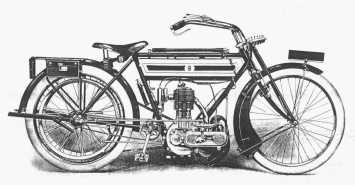
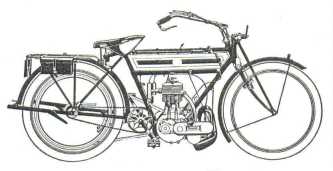
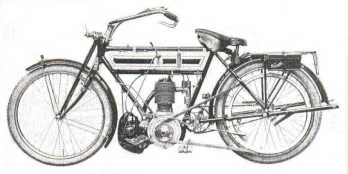
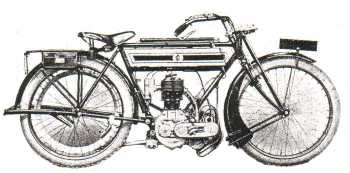 1912 TT Roadster Model
|
Brief Specifications and Variations
1910 - 499cc 3½ hp. 85mm bore X 88mm stroke.
........... Available as Roadster, Free-engine (hub clutch) or
Tourist Trophy (Racing) Models.
1911 - As 1910, with the addition of a Tourist Trophy Roadster Model.
1912 - As 1911, and again a choice of four models.
Again, small improvements were being made year by year, and
Triumph were well established throughout the world. Thanks to Siegried
Bettmann's overseas White Sewing Machine Company contacts sales
catalogues were being printed in a multitude of languages.
Following the Olympia Show of 1910 the British Daily
Telegraph newspaper said that the Triumph Company held premier
position and that, "The entire exibit was marked by the beautiful
workmanship for which this firm has attained a world-wide reputation."
Triumph Models of these years are practical veteran machines, given
the limitations of the still primative brakes, especially for the
fitter rider. However, the convenience of the clutch hub makes these
models also practical for those who like to have an engine running
before attempting to 'hit the road'.
The engines had now reached a capacity whereby it became
practical to fit a sidecar.
Production (and sales) still increasing.
1910 - Around 4,150.
1911 - Something in the order of 5,100.
1912 - Something in the order of 6,000.
Remember, that these production figures are the result of my
researches as no official records have survived. I need details from
YOUR machine to make my findings more accurate.
I have knowledge of Triumphs, or parts thereof, from this period surviving in
Australia, Britain, Canada, Denmark, Germany, Holland, Ireland, Italy,
New Zealand, South Africa and Southern Rhodesia (Zimbabwe).
For more details you really need to refer to the booklets I have
written covering the Early Models.
|
|